This is a demo site showcasing flipbooks created with Visual Paradigm Online.

Author Archives: vpadmin

Streamlining Complex Systems with Effective Interaction Overview Diagrams

Streamlining Complex Systems with Effective Interaction Overview Diagrams

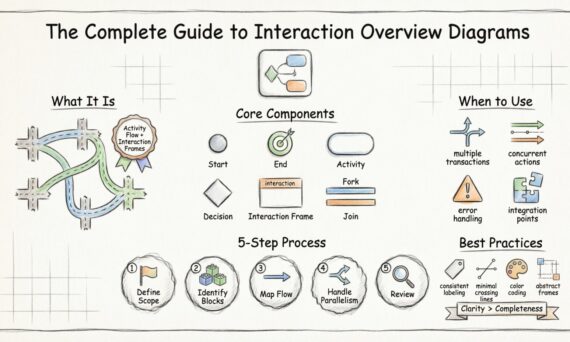
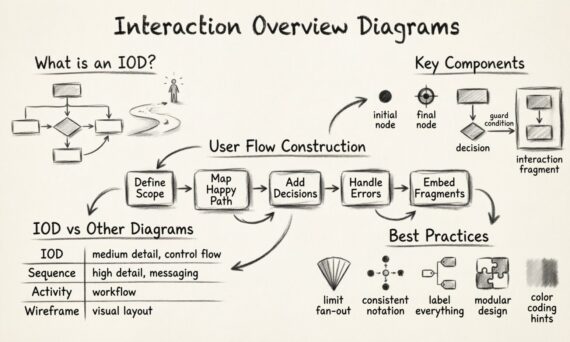
Modern software architecture often resembles a sprawling city rather than a single building. As systems grow in scope, the interactions between various components become increasingly difficult to visualize and manage. In this landscape, clarity is not just a convenience; it is a necessity. This guide explores how Interaction Overview Diagrams (IODs) serve as a critical
Read More

The Complete Guide to Crafting Impactful Interaction Overview Diagrams

The Complete Guide to Crafting Impactful Interaction Overview Diagrams

Software architecture relies heavily on clear communication. When systems grow complex, static diagrams often fail to convey the dynamic behavior of components working together. This is where the Interaction Overview Diagram becomes essential. It bridges the gap between high-level activity flows and detailed object interactions. By combining elements of activity diagrams and sequence diagrams, this

Read More

Visualizing User Flows: An In-Depth Look at Interaction Overview Diagrams

Visualizing User Flows: An In-Depth Look at Interaction Overview Diagrams

In the landscape of software design and user experience architecture, clarity is paramount. When teams attempt to build complex systems, the path a user takes through an application must be mapped with precision. This is where the Interaction Overview Diagram (IOD) becomes a critical asset. Unlike static wireframes, an IOD provides a dynamic representation of

Read More

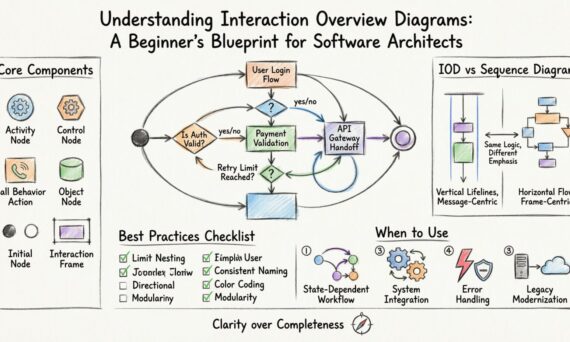
Understanding Interaction Overview Diagrams: A Beginner’s Blueprint for Software Architects

Understanding Interaction Overview Diagrams: A Beginner’s Blueprint for Software Architects

Modern software systems are intricate webs of logic, data flow, and user interaction. As a software architect, your responsibility extends beyond writing code; it involves visualizing how disparate components communicate under varying conditions. While Sequence Diagrams excel at showing object interactions over time, they can become unwieldy when dealing with complex branching logic or high-level

Read More

Building Better Systems: The Role of Interaction Overview Diagrams in Architecture

Building Better Systems: The Role of Interaction Overview Diagrams in Architecture

Designing complex software systems requires more than just code. It requires a clear map of how different components communicate and interact. Without a structured visual representation, architectural decisions can become opaque, leading to maintenance challenges and integration failures. This is where the Interaction Overview Diagram becomes essential. It serves as a high-level blueprint for control

Read More

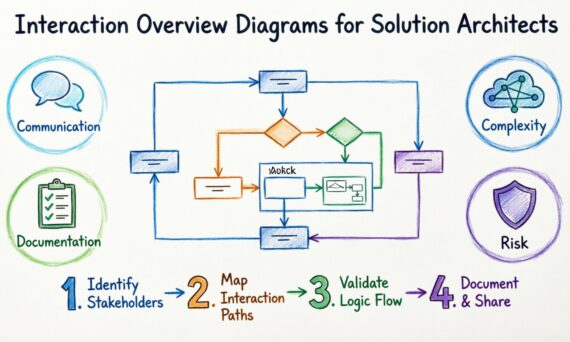
Why Interaction Overview Diagrams Are Essential for Modern Solution Architects

Why Interaction Overview Diagrams Are Essential for Modern Solution Architects

In the complex landscape of software engineering, clarity is the most valuable currency. As systems grow in scale and distributed architectures become the norm, the ability to visualize flow and logic without getting lost in implementation details is paramount. This is where the Interaction Overview Diagram (IOD) steps in. For a Solution Architect, this specific

Read More

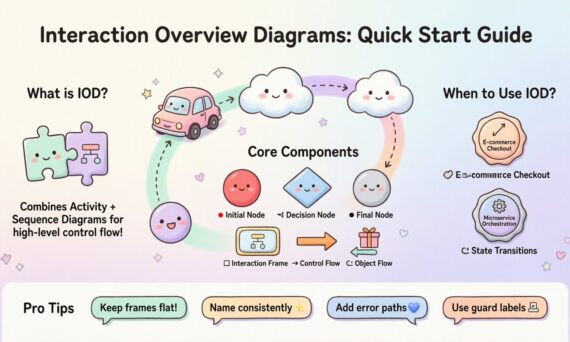
Quick Start to Interaction Overview Diagrams: Get Clarity in Minutes

Quick Start to Interaction Overview Diagrams: Get Clarity in Minutes

System architecture often involves complex flows that are difficult to visualize through static text or isolated diagrams. When a single sequence diagram cannot capture the breadth of a workflow, or an activity diagram lacks the necessary detail on object interactions, the Interaction Overview Diagram (IOD) provides the necessary bridge. This guide explores the mechanics, notation,

Read More

Deep Dive into the Mechanics of UML Profile Diagrams

Deep Dive into the Mechanics of UML Profile Diagrams

Unified Modeling Language (UML) serves as the backbone for software architecture and system design. However, standard UML often falls short when addressing specific industry needs or proprietary requirements. This is where the UML Profile Diagram becomes essential. It allows modelers to extend the language without altering the core standard. This guide explores the structural mechanics,

Read More

Beyond the Basics: Advanced Techniques in Creating Interaction Overview Diagrams

Beyond the Basics: Advanced Techniques in Creating Interaction Overview Diagrams

Interaction Overview Diagrams (IOD) serve as a critical bridge between high-level system requirements and detailed behavioral specifications. While introductory courses cover the linear flow from start to finish, real-world systems demand complexity. They require branching logic, parallel processes, and robust error handling. This guide explores the advanced mechanics of modeling these interactions with precision. We

Read More

A Practical Approach to UML Profile Diagrams

A Practical Approach to UML Profile Diagrams

Unified Modeling Language (UML) provides a standardized notation for visualizing software systems. However, the standard set of diagrams often lacks the specificity required for specialized domains. This is where the UML Profile Diagram becomes essential. It allows architects to extend the language without altering its core metamodel. This guide explores the mechanics, construction, and application

Read More